

Best Hard Water, Mineral-Chelating Skincare to Clear Bumpy-Texture & Acne Effects
BBC Featured • Barrier-First • Made in London & Loved Internationally
✔️ Chelating cream-to-milk face wash that lifts mineral residue without stripping
✔️ Non-comedogenic — clears the film that clogs pores & dulls skin
✔️ Barrier repair to ease tightness, reactivity and the look of redness
Vegan & Cruelty-Free
NO RETINOL OR HARSH ACIDS
Clinically Tested
5.0 Google Rating
The Best Natural Skincare for Clearing Hard Water & Reversing Mineral Damage
New Customers get an extra 15% off entire order with code: HardWater15
Barrier Restoring Chelating Creamy Face Wash (Dry Cleanse), is the one specialist step that actually clears the mineral film at the beginning of your routine, which is essential for effectively removing the calcium deposits & residue blocking pores. Other customer recommended remedies help reverse the mineral damage, breakouts & stress for a healthier, fresher & more dependable complexion.


Hard water leaves a mineral film on your skin that ordinary cleansers cannot rinse away — which is why your face can feel tight, look dull and break out along the chin and jaw no matter what you put on it. Our hard water skincare lifts that residue without stripping, then rebuilds the barrier underneath it.
Around 60% of UK households live in a hard water area. If you are in London, the South East, East Anglia or the Midlands, your skin has been dealing with this every single day.
Everything you need to know about hard water & your skin from a Specialist
Does hard water actually cause acne?
Honest answer: hard water isn't thought to cause acne on its own — but it produces something that looks so much like it that most people never question the diagnosis. Acne begins inside the skin, with oil, hormones and how pores behave. Hard water simply adds a daily external stressor on top, and the way it shows up is almost identical: congested bumps across the forehead and cheeks, spots returning along the chin and jawline, rough texture, redness and skin that reads as stressed and reactive.
That overlap is the real problem, because it sends people down the wrong path. They treat what they can see with an acne product designed to dry skin out or scrub it off, which strips a barrier that is already coated in mineral residue — so skin becomes more reactive rather than clearer. Something works for a fortnight, then stops. Then it's a stronger product, then a fourth cleanser, maybe a prescription. Meanwhile the one variable that never changes is the water running over the face twice a day. You can't clear a problem you haven't correctly identified.
One pattern gives it away more than any other: skin that calms down on holiday or when staying elsewhere in the country, then flares within a week of coming home. Same skin, same products, different water. If that sounds familiar, it costs very little to rule out — your cleanser is the cheapest variable to change and the only step that actually contacts the water. We set out the reasoning and research in can hard water cause acne, and this guide covers what hard water does to texture and the barrier.
Why your face feels tight & stressed after washing
That squeaky-clean feeling is not a sign your face is clean. It is the sound of your acid mantle being stripped and mineral residue drying tight across the surface.
Here is the cycle. Hard water makes cleansers lather badly, so you use more product and wash for longer. The extra surfactant strips more of your natural oils. Minerals bind to what is left and dry down as a film. Your skin reads the dryness as a signal to produce more oil, so by the afternoon you are shiny and tight at the same time — which feels like a contradiction, but is completely logical once you know what is happening.
Most people then respond by cleansing harder or switching to something stronger, and the barrier gets thinner each time. A non-foaming, cream-to-milk cleanser breaks that loop, because it lifts the residue without taking your lipids with it. If your skin has been in this cycle for a while, our guide to a damaged skin barrier explains what recovery actually looks like.
What "chelating" means, and why it matters here
Chelating ingredients bind to calcium and magnesium so they can be rinsed away, instead of settling and hardening on your skin. Hair care has used this principle for years — chelating shampoos exist precisely because hard water leaves mineral deposits on the hair shaft. Skincare has been much slower to catch up, and very few face washes do it at all.
Our Barrier Restoring Creamy Cleanser does it with botanicals rather than harsh surfactants. Micro-polishing Irish Sea Moss and barrier-repairing Rice Bran Oil emulsify the calcium film in a cream-to-milk texture, while Ashwagandha and Bisabolol comfort reactive skin as it goes.
Do shower filters and water softeners fix hard water skin?
Partly, and it is worth being straight with you about the limits.
A shower filter reduces chlorine and some metals, and plenty of people genuinely notice a difference in how their hair feels. But most filters do not remove calcium and magnesium — the manufacturers say so on their own product pages. Your water hardness stays exactly the same, which means the mineral film that clogs pores and dulls skin is still forming every time you wash.
A water softener does remove the minerals properly, through ion exchange. It also costs hundreds of pounds upfront, needs ongoing salt and servicing, and treats the whole house whether you want it to or not. If you rent, it is usually not an option at all.
Changing what you wash your face with is the cheapest place to start, and it is the only one of the three that works no matter where you are — at home, at the gym, in a hotel. A chelating cleanser lifts the residue directly off the skin, so everything you apply afterwards can actually reach it. If you do fit a filter, brilliant: the two work well together, and the cleanser handles what the filter leaves behind. Here is what else to change in a hard water routine.
Hard water doesn't stop at your face
The same mineral film forms anywhere water runs — your back, chest, shoulders and arms. Those are also the areas you rinse fastest and towel roughest, so the residue gets less attention and more friction.
If you get bumpy texture between the shoulder blades, congestion across the chest, or spots along the jaw and neckline that never quite clear, hard water is worth ruling out before you reach for anything stronger. Body skin responds to exactly the same approach as facial skin: lift the residue, then rebuild.
Our Barrier Restoring Face Wash can be used below the neck on affected areas, in the shower, on the same days you use it on your face. There is no separate body product to buy.
Why hard water breaks skin out & makes it bumpy
Calcium and magnesium bind with cleansers and your own natural oils to leave a waxy film — the same "soap scum" you see on a shower screen. On skin, that film:
- shifts your natural pH and unsettles the skin microbiome
- disrupts the protective barrier, so moisture escapes faster
- contributes to congestion and rough, "sandpaper" texture
- triggers recurring breakouts, most often on the chin and jawline
- leaves skin feeling tight and reactive, even when it still looks oily
Then the cycle repeats. Most people respond by cleansing harder or going stronger, which strips the barrier further and produces more oil, more roughness and more breakouts.
The frustrating part: many "acne" and "clarifying" products make hard water skin worse, because they were never designed for water that fights back.
How our hard water routine works
Our approach is barrier-first, and it runs in three moves: remove the minerals, rebalance the skin, rebuild the barrier.
Removal comes from chelating botanicals that lift the waxy film without stripping, so your other products stop being blocked by a layer of calcium. Rebalancing means supporting your skin's natural pH and the microbiome that depends on it, which is what makes skin less reactive day to day. Rebuilding means replacing the lipids hard water takes with it, using non-comedogenic ingredients that restore comfort without clogging pores.
The order matters. Applying a rich cream over an un-removed mineral film is why so many people find their moisturiser stopped working. Clear the residue first and the rest of your routine starts performing again. The full step-by-step routine is here.
How do I know if hard water is affecting my skin?
The signs are consistent enough to be recognisable. Skin feels tight within a minute or two of washing. There is a faint film that never quite seems to rinse off. Texture is rough or bumpy, particularly across the forehead and cheeks. Breakouts recur in the same places, usually the chin and jawline. Your skin is more sensitive than it used to be, and products that once suited you now sting.
A useful test: notice what happens to your skin when you go away. If it calms down noticeably on holiday or when visiting family in a different region, and deteriorates again within a week of being home, your water is a strong suspect.
You can also check your water hardness directly — our hard water skin check explains how to find your area's ppm reading and what that number actually means for your face.

Our #1 face wash for hard water: Specialist For Sensitive feeling skin & a reactive barrier
Barrier Restoring Chelating Face Wash — £24/ 100ml (Built for real UK water conditions)
A 100% natural, cream-to-milk chelating face wash. Micro-polishing Irish Sea Moss and barrier-repairing Rice Bran Oil lift the calcium film left by tap water,while Ashwagandha and Bisabolol comfort reactive skin.
- pH Alignment: We restore the slightly acidic 'Acid Mantle' (pH 4.5–5.5) that hard water minerals attempt to neutralise.
- Mineral De-clogging: Like our 'cream-to-milk' specialist formulation which emulsifies the waxy soap-scum film that physically suffocates your microbial flora.
- Adaptive Resilience: We recondition your skin to thrive in high-calcium environments by strengthening your barrier and creating conditions for a more calmer, stress-free environment.


Beyond the Barrier: Protecting Your Skin’s Living Ecosystem
At Frank’s Remedies, we view your skin not as a static surface, but as a dynamic Cutaneous Ecology—a living interface where your microbiome and skin barrier work in perfect synchrony. Hard water is a primary disruptor of this ecosystem. The high alkalinity of mineral-heavy water raises your skin’s pH, triggering Microbiome Dysbiosis. This imbalance allows harmful bacteria to thrive, leading to the inflammation, redness, and 'water-stressed' breakouts often associated with London and South East tap water.
Frank's "Microbiome-Safe" Approach
Our specialist approach focuses on pH-Stabilisation and Post-biotic Support. While traditional cleansers use harsh surfactants that strip your skin's first line of defense, our 100% natural formulas are independently tested to be Microbiome-Gentle. By using bio-intelligent ingredients like Sea Moss and Ashwagandha, we neutralise mineral residue while nourishing the commensal bacteria your skin needs to stay resilient, clear, and hydrated.




“Your products are so amazing & work so well! My skin feels so healthy compared to store bought! Thank you
”

“My skin has NEVER been so clear. I've tried everything. Several creams, brands, facials, prescribed creams.. the lot.
@Frank'sRemedies has changed my life.
”
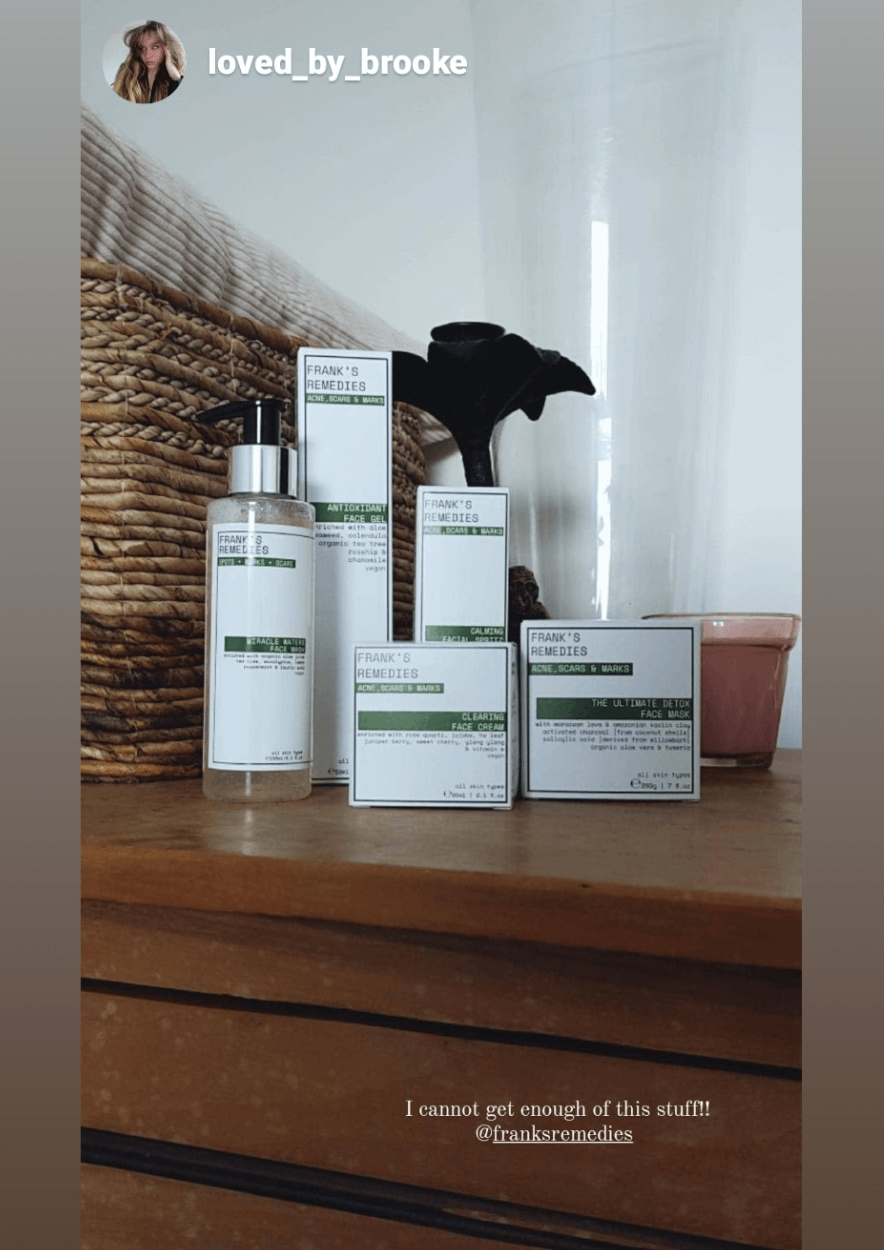
“I cannot get enough of this stuff!!!
”

“Game-changing!
I love how these remedies adapt to concerns & are multifunctional so you don't need a whole draw full of skincare!
”

“Soooo happy how my skin is improving!!
Definitely going to be less worried about my skin in my wedding photos!!
”
Frequently asked questions
What is the best face cleanser for hard water?
Can hard water cause cystic or hormonal acne?
How do I clear acne caused by hard water minerals?
How do you reverse the effects of hard water on your skin?
How do I know if hard water is affecting my skin?
Is this non-comedogenic for clogged pores and breakouts?
Is this safe for sensitive skin and hard water together?
Does hard water cause acne?
What is a chelating face wash?
Will a shower filter stop hard water breakouts?
Can hard water affect my back, chest and shoulders?
What is the best moisturiser for hard water?
What if it doesn’t work for me?
Not sure how hard your water is?
Around 60% of UK households live in a hard or very hard water area, and most people have no idea what their reading is. If you are in London, the South East, East Anglia, the Midlands, Essex, Kent, Hertfordshire, Cambridgeshire or Lincolnshire, your water is almost certainly hard — often well above 200 ppm, which is more than enough to leave a film on your skin after every wash.
It takes about a minute to find out. Our hard water skin check shows you how to look up your area's ppm reading and what that number means in practice, and this guide covers exactly what to change in your routine once you know.
If the number comes back high, start with the cleanser. It is the one step that actually contacts the water, and the one place the mineral film is either removed or left behind.
If you are looking for the best hard water face wash, a chelating cleanser or a mineral-neutralising face cream, look for a routine that does more than cleanse. Hard water skincare should lift mineral residue, support pH balance and put barrier recovery first — especially if you are dealing with hard water breakouts, bumpy skin or that tight feeling after washing. Free UK delivery over £35, and a 30-day money-back guarantee on everything.