

Best Natural Acne Treatment Products for Teen Spots. Gentle, Safe Skincare for Boys & Girls 11+
BBC Featured • Loved by Parents & Teenagers
✔️ Visible clearing from 2 weeks — clears breakouts while rebuilding the barrier & improving skin health
✔️ No retinol, benzoyl peroxide or harsh acids — safe for developing skin from age 11
✔️ 100% natural & vegan — fragrance-free, no GMOs, parabens or mineral oils
Vegan & Cruelty-Free
NO RETINOL OR HARSH ACIDS
Clinically Tested
5.0 Google Rating
Understanding Teen Acne, Breakouts & Hormonal Skin Changes For Boys & Girls
What are the different types of teenage acne?
- Blackheads — Open pores clogged with oil and dead skin. The dark colour isn't dirt, it's oxidised sebum, which is why scrubbing harder never works. Most common on the nose, chin and forehead. What helps: consistent gentle cleansing, plus a weekly clay-based mask to draw the congestion out.
- Whiteheads — The same blockage, but closed over by skin. Squeezing them pushes bacteria deeper and is the fastest route to a scar. What helps: a low-dose 2% BHA in a rinse-off weekly treatment, keeping pores clear before they close over.
- Papules and pustules — The red raised spots, and the ones with a white head. These are inflamed, so the priority is calming rather than stripping. Harsh actives here almost always make them angrier. What helps: adaptogenic, anti-inflammatory formulas that bring redness down while clearing bacteria.
- Cystic and nodular acne — Deep, painful lumps under the skin that never come to a head. This type scars, and it does not respond to skincare alone. Please see a GP. Our formulas are often used alongside prescribed treatment to help ease the dryness it causes.
Most teenagers have two or three of these types at once, in different areas of the face. That's why a single spot cream or spot treatment rarely clears teenage skin — it tackles one spot while the cycle causing the next one carries on underneath. Our approach treats the whole face: a routine that clears existing spots and calms the oil and skin stress behind the next batch.
Which skincare ingredients should teens avoid?
Most skincare marketed to teens was formulated for adults. These are the five we advise under-19s to stay away from:
Retinol — Designed for ageing skin. On a still-developing barrier it commonly triggers peeling, sensitivity and rebound oil.
Vitamin C — Highly unstable and frequently irritating on reactive young skin, with little benefit for active breakouts.
Hydroxy acids (AHAs/BHAs at high strength) — Adult-strength exfoliants cause micro-tears in developing skin, which triggers more oil, not less. Low-dose BHA in a rinse-off weekly mask is a different matter entirely.
Anti-ageing products — There is no ageing to treat. These formulas are rich, often comedogenic, and can worsen congestion.
Brightening products — Frequently contain aggressive actives aimed at pigmentation concerns teens don't have.
"Anything labelled brightening or anti-ageing can cause lasting damage to children if used incorrectly..." — Frank, Founder & Formulator
Every formula in this collection is built around what young skin actually needs: barrier support, gentle pore clearing and microbiome balance. Nothing borrowed from an adult routine.
WHAT SKINCARE IS SAFE FOR AN 11, 12 OR 13 YEAR OLD?
Skincare should match skin age, not trends. Here's where to start:
Ages 11-13 — First breakouts, usually on the forehead and nose. Keep it to two steps: Miracle Waters Face Wash or Barrier Restoring Creamy Cleanser morning and night, followed by Clearing Face Cream. That's it. No acids, no serums, no actives. The Clearing Essentials Kit covers exactly this.
Ages 14-16 — Oil production peaks and breakouts spread to cheeks, chin and jaw. Move to the full 3-step Ready Steady Clear Kit, and add the Ultimate Detox Face Mask once a week if congestion is stubborn.
Ages 17-19 — Hormonal patterns settle but marks and texture linger. Continue the 3-step routine, build the Detox Mask to 2-3 times weekly, and add the Antibacterial Facial Spritz for sport, commuting and long days.
All ages — Our formulas are documented for ages 11 to 65+. If skin is painful, cystic or scarring, see a GP alongside any routine.
Does diet, sleep or stress affect teenage acne?
Not directly, and anyone telling your teenager their acne is their own fault for eating badly is both wrong and unhelpful. Acne is hormonal. But some things genuinely influence how reactive skin is.
What the evidence supports. High-glycaemic foods — white bread, sugary drinks, most snacks marketed at teenagers — spike insulin, which nudges oil production upward. Skimmed milk shows a consistent association with breakouts across studies; whole milk and cheese far less so. Neither causes acne on its own.
What doesn't. Chocolate and greasy food have never been shown to cause acne. Neither has an unwashed face — over-washing causes considerably more breakouts than under-washing.
What matters more than diet. Sleep and stress. Cortisol raises oil production and slows healing, which is exactly why breakouts worsen during exam season. Skin does most of its repair work overnight, so a teenager running on five hours is working against their own routine.
Two habits worth the effort. Change pillowcases twice a week, and stop touching your face. The average person touches their face more than twenty times an hour, moving bacteria around all day.
How to Build Your Teen Skincare Routine
For mild or early breakouts, start with the Ready Steady Clear Kit — the 3-step starter kit that covers the daily routine below. For stubborn or widespread breakouts, or skin that needs a full reset, the Skin SOS Kit is the complete kit: the 3-step routine plus the weekly Detox Mask and daily Antibacterial Face Spray, saving £33 — the kit that cleared Alana's hormonal breakouts at 16.
Morning & Evening Teen Routine
- Miracle Waters Face Wash — deep cleansing and pore purifying without stripping
- Antioxidant Face Gel — weightless calming to clear spots and fade blemishes
- Clearing Face Cream — layer on top: ultra-hydrating barrier repair that seals in the gel and soothes stressed skin all day
How to use: always in this order — cleanse, gel, then cream layered on top. The cream is the seal: it locks the gel's calming actives in and keeps the barrier comfortable, so skin never gets the tight, stripped feeling other treatments leave behind. That's why the layers work when single spot creams don't.
Daily on-the-go protection: the Antibacterial Spritz lives in the school bag or gym kit — mist after PE, sport, a commute or any hot, sweaty moment to stop sweat & bacteria settling into fresh flare-ups between cleanses.
Weekly boost: the Ultimate Detox Face Mask 1-2 times a week after cleansing — it lifts the congestion daily cleansing can't reach, so the whole routine clears faster.
Want it all in one Skin Kit? The Skin SOS Kit includes the full 3-step routine, the weekly mask and the daily spray — the complete clearing system (saving £33).
WHAT CAUSES TEENAGE ACNE & BREAKOUTS?
Teenage skin is under siege from hormonal changes that trigger oil glands into overdrive, cause pores to clog easily, and make skin highly reactive to stress, diet, and environmental factors. During puberty, androgens (male hormones present in all teenagers) dramatically increase, causing your sebaceous glands to produce up to 5 times more oil than they did in childhood.
The heartbreaking reality: many teenage acne products are too harsh for young, developing skin. They strip away natural oils, cause redness and irritation, and can actually make breakouts worse by damaging your skin barrier. Teens are left feeling helpless as harsh treatments fail or make things worse.
Frank's approach: Safe, natural, effective. Our formulas are specifically designed for young, sensitive skin that's going through hormonal changes. We work with your skin's natural balance—clearing breakouts without the harsh chemicals, burning sensations, or peeling that conventional treatments cause. BBC featured us as one of the UK's top inventions for taking this different approach.
#1 BEST-SELLING SOLUTION FOR TEEN ACNE & BREAKOUTS


new customers get an extra 10% off entire order with code: WELCOME10
Get this Kit for £53.10. Less than £0.70 a day for clearer skin.
✓ 30-Day Money-Back Guarantee
✓ BBC documented proof of results
✓ Free UK Shipping with this kit
✓ Tracked US delivery with UPS
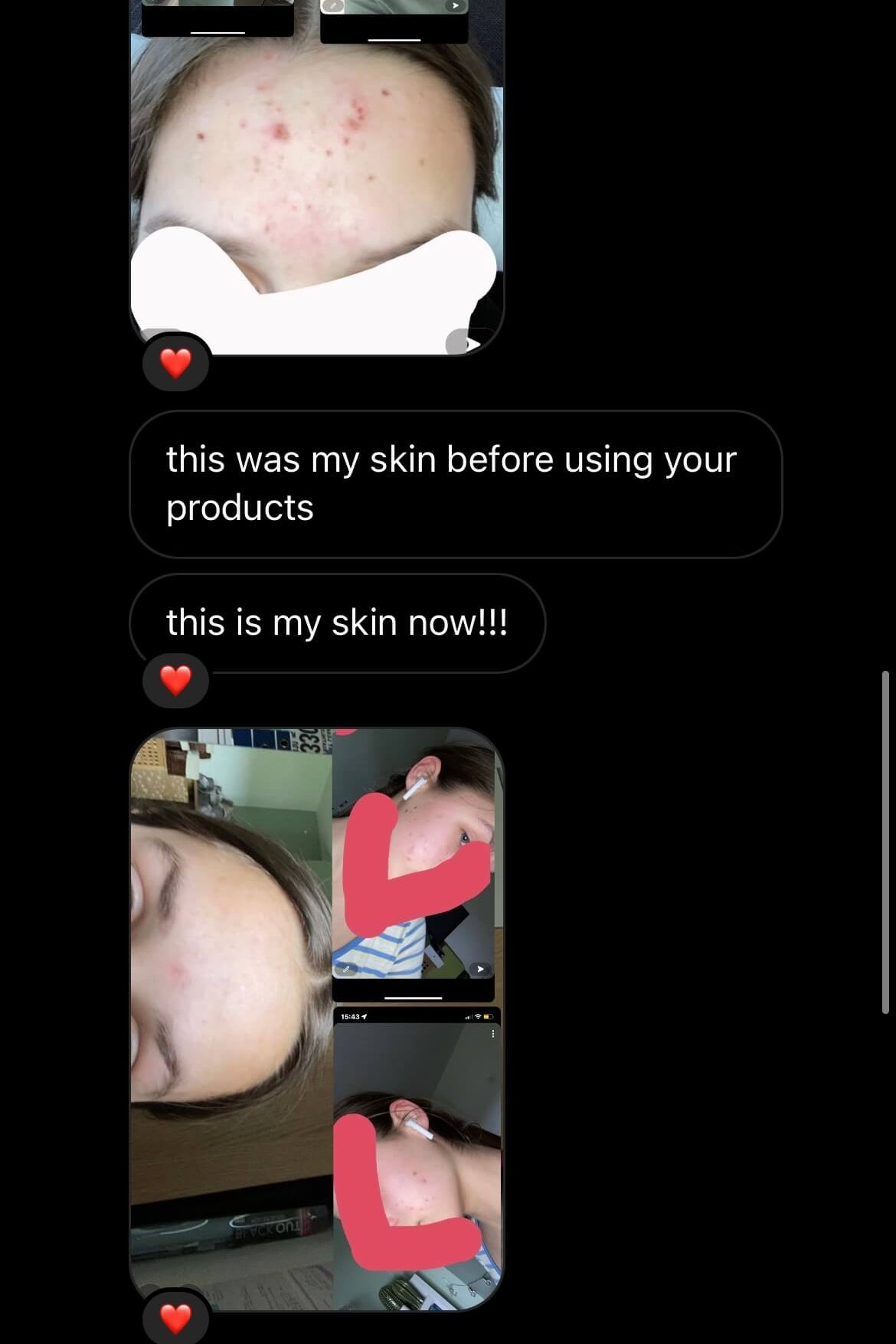
“Your products are so amazing & work so well! My skin feels so healthy compared to store bought! Thank you
”

“My skin has NEVER been so clear. I've tried everything. Several creams, brands, facials, prescribed creams.. the lot.
@Frank'sRemedies has changed my life.
”
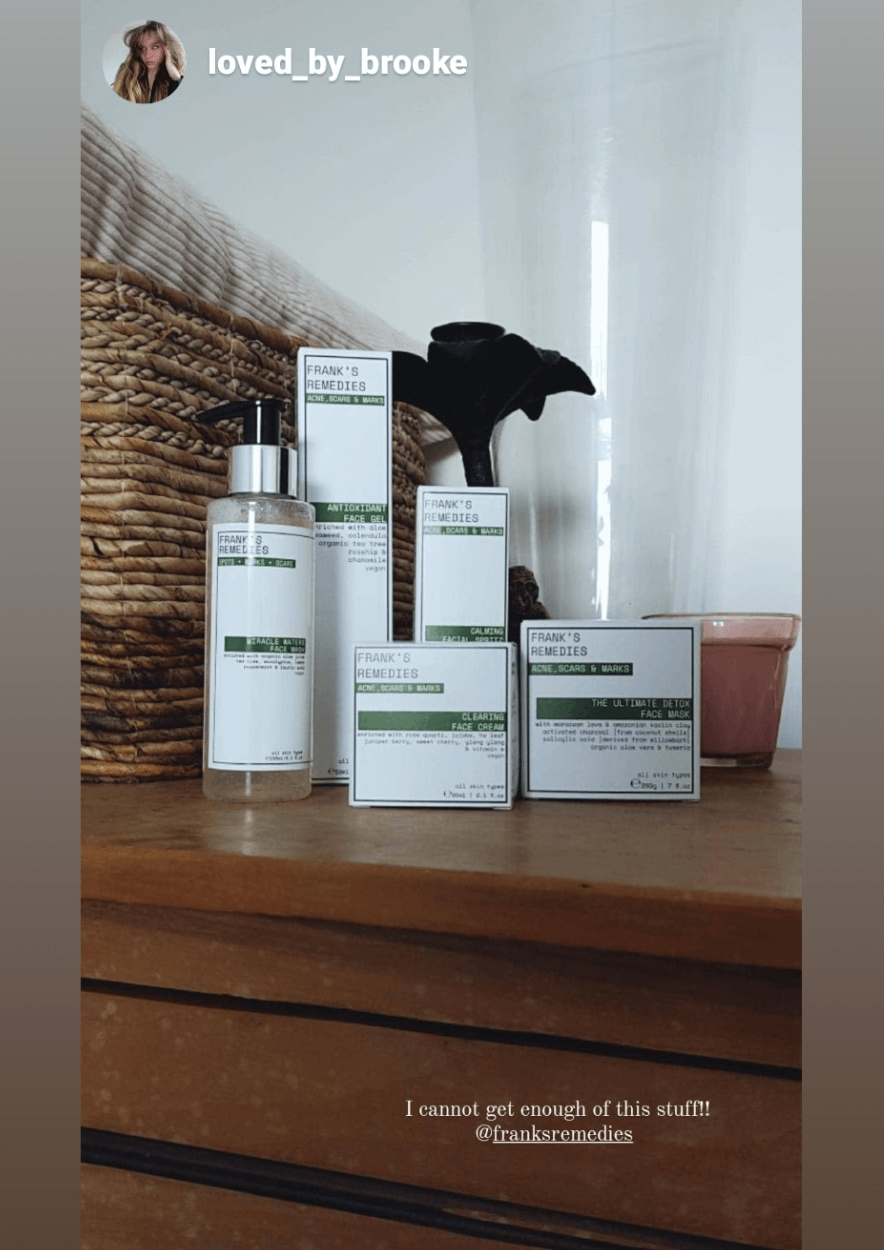
“I cannot get enough of this stuff!!!
”

“Game-changing!
I love how these remedies adapt to concerns & are multifunctional so you don't need a whole draw full of skincare!
”

“Soooo happy how my skin is improving!!
Definitely going to be less worried about my skin in my wedding photos!!
”
TEENS' WEEKLY CLEARING ROUTINE
DAILY 3-STEP ROUTINE (AM & PM):
Ready Steady Clear Kit (Save 24% with these 3 products) — the BBC-documented 3-step routine for teen & hormonal breakouts.
Step 1 Cleanse: Miracle Waters Face Wash 150ml - the face wash for teenage acne that cleans without stripping. Flushes oil, sweat, SPF and the bacteria behind blackheads and whiteheads. Australian Tea Tree and Chinese Eucalyptus purify, 70%+ organic Aloe Vera reconditions.
Step 2 Calm: Antioxidant Face Gel 50ml - Weightless adaptogenic hydration. Aloe Vera and French Seaweed calm reactivity and balance oil to keep shine down all day, while Rosehip and Chamomile soften post-breakout marks.
Step 3 Hydrate: Clearing Face Cream 60ml - the acne cream for teens that hydrates rather than strips. Non-comedogenic, with Cherry Kernel and ceramide-rich Grape Seed to strengthen a stressed barrier without blocking pores.
ON-THE-GO SUPPORT: FLARE UPS, SWEAT & POLLUTION
Antibacterial Facial Spritz - The one to keep in a school bag, gym kit or blazer pocket.
Sweat, humidity, PE kit, face-touching and polluted city air all leave bacteria and impurities sitting on skin — a direct route to fresh breakouts. This ultra-fine mist resets it in seconds.
Alcohol-free and made only from pure plant juices and herbal hydrosols, so it supports skin pH and the microbiome rather than stripping it.
Use as a toner after cleansing, or spritz any time skin feels hot, sweaty or stressed.
Great for: teens with oily, breakout-prone or hormonal skin; anyone doing sport, commuting or living in a city.
TEENS' WEEKLY PORE PURIFYING RESET
Ultimate Detox Face Mask - The deep clear-out daily cleansing can't reach.
Moroccan Lava Ash and Indonesian Activated Charcoal draw out trapped oil, pollution and pore build-up, while Amazonian Kaolin Clay minimises the look of enlarged pores.
Dual resurfacing: 2% BHA Salicylic Acid from willow bark smooths bumpy texture, fades dark marks and stops blackheads and whiteheads forming, backed by microfoliant clay. 200x Aloe Vera reduces inflammation and fades acne scarring, and Indian Turmeric brightens fast.
Tailorable benefits: a waterless powder activated fresh each time — water for everyday detox, rose water for hydration, chamomile tea for soothing. Mask changes colour when each area is detoxed, so you know exactly when to rinse.
SEE MORE CUSTOMER TRANSFORMATIONS

Concern: Hormonal breakouts
Results in 2 1/2 months
Uses: Skin SOS Kit
“I never knew what to do when I started to get acne, it was a bit shocking as it came up all of a sudden. I love the products, and I am happy my skin is clear and I feel really confident now.” - Alana, 16, UK

Concern: Oily/Congestion
Results in 2 months
Uses: Clearing Essentials Kit
“These remedies have been a saviour - the blemishes on my forehead are gone. Thank you so much for creating them, they help keep my skin in check and make my skin glow. Really quick and easy to use too.” - Alex, 22, UK

Concern: Spot Prone
Results in 2 months
Uses: Miracle Waters Face Wash, Antioxidant Face Gel, Clearing Face Cream & Detox Mask
"I had a lot of red spottish marks under my skin for years. I’ve been using franks remedies for about six months now and within the first two weeks all of the red marks surfaced. I washed with the miracle waters face wash every morning and every night as well as spritzed with the calming face spritz and I creamed with the clearing face cream (which actually does clear!) - Aysha, 20's, UK

Concern: Adult Acne
Results in 2 weeks
Uses: Ready Steady Clear Kit
"Thank you! My skin has never been better for a long time. I am a man of 50 years and suffered with adult acne." - Paul, 50, UK
FEATURED SKIN SPECIALIST


Frank's Remedies® vs Other Acne Treatments
A natural alternative to harsh prescription treatments & shop-bought acne products. Age-appropriate by design, our specialist formulas clear breakouts while remedying the underlying skin stress behind them. "Once you go Frank, your spots don't come back" — Flo, UK Customer
Visible clearing from 2 weeks (on average)
Calms the source, not just the spot
Safe from age 11 · Vegan · Made in London
Improves skin barrier health as it clears
Frank's Remedies®
Prescription Treatments
Other Acne Brands
Safe from age 11
Ages 11 to 65+
GP supervision only
Adult strengths, not for young skin
Effect on the skin barrier
Protects & reconditions
Dryness & peeling common
Strips & overly dries
Complexion radiance
Nourishes for a healthy glow
Targets acne medically only
Targets spot bacteria only
No Retinol or Harsh Acids
Plant-based & skin-kind renewal
Usually retinoid-based
High-strength daily acids
No Benzoyl Peroxide
Natural antibacterial actives instead
Often peroxide-based, makes skin sensitive to sunlight
Bleaches towels, leaves young skin red & irritated
Maintains Stability & Clarity
Adaptogenic formulas actively balance
Not formulated for long-term balance
Clears the spot, keeps the breakout cycle





THE SCIENCE OF PUBERTY SKIN & THE SKIN MICROBIOME
Why does stripping teen skin make acne worse?
Traditional teen acne treatments rely on aggressive acids that strip the skin's natural oils and kill beneficial bacteria along with the harmful ones. The result is microbiome dysbiosis — an imbalanced ecosystem where blemish-causing bacteria thrive precisely because their competition has been removed.
There's a second problem layered on top. During puberty, rising androgens shift skin into an oil-loving state, and stripping it triggers overcompensation: skin reads dryness as a signal to produce more oil, not less. That's the rebound cycle behind persistent redness and breakouts that keep returning to the same places.
We focus on barrier and prebiotic support instead. By nourishing the good bacteria rather than wiping the slate clean, we help skin maintain its own defences — clearing breakouts while keeping the barrier healthy, hydrated and stable. Balanced oil production, rather than suppressed oil production.
Why does my teen's face feel tight after washing?
That squeaky-clean feeling is usually a warning, not a result. It means the acid mantle — the skin's protective lipid layer — has been stripped away.
A microbiome-friendly cleanser removes daily debris, sweat, SPF and pore-clogging build-up while leaving that layer intact. Beneficial bacteria stay on the skin, where they naturally suppress the growth of blemish-causing microbes. You get pores cleared without the dryness that conventional face washes cause, and without the oil rebound that follows.
If skin feels tight, taut or squeaky after cleansing, the cleanser is too harsh — regardless of what the label promises.
Is my teen over-exfoliating?
Very possibly. Many teenagers are using high-strength exfoliants formulated for adult skin, which causes micro-tears and a compromised barrier on skin that's still developing.
The stripping effect triggers skin to over-compensate with even more oil, creating a self-sustaining cycle of redness, congestion and breakouts. More exfoliation feels like the solution, which is what makes the cycle so hard to break.
Signs to watch for: skin that stings when moisturiser goes on, patches of shine alongside patches of flaking, redness that doesn't settle, and breakouts that keep returning to the same spots. The fix is counterintuitive but reliable — scale back to gentle cleansing and barrier repair, and let the skin recover. A low-dose BHA in a weekly rinse-off mask gives you pore clearing with recovery time built in.

Featured On & Trusted By:
BBC 1 - Featured as UK's Top Inventions | HM King Charles - Spotlighted 3 Times | Charlotte Tilbury MBE - Beauty Legend Loves Our Formulas
Break the cycle. Transform your skin. Reclaim control & confidence.
READY STEADY CLEAR KIT: Our best-selling 3-step routine (Face Wash, Gel & Cream) – SAVE 24%
SKIN SOS KIT: Complete treatment system for active breakouts
CLEARING ESSENTIALS KIT: Maintenance routine for clear, healthy skin
TAKE SKIN QUIZ: Not sure what you need? Get personalised recommendations in 2 minutes
LEARN MORE FROM FRANK'S JOURNAL (BLOG):
- How to Clear Teenage Acne: The Routine That Actually Works
- 5 Skincare Ingredients Teenagers Should Avoid — the ITV Warning
- Teen Skin vs Adult Skin: Can One Acne Cream Really Serve Both?
- Why Spot Creams Alone Never Clear Teen Skin
- Exam Stress Breakouts: What Stress Really Does to Teen Skin
- See the BBC1-Documented Routine
WHY WE BUILT THIS FOR TEENAGERS SPECIFICALLY
Acne arrives at the precise age when appearance starts to feel like everything. The research is consistent and fairly sobering: teenagers with acne report significantly higher rates of social withdrawal, anxiety and low self-esteem than their peers. Parents usually see it before their teen will admit to it — the cancelled plans, the camera turned off, the hood up.
That's why clearing skin gently matters more at this age than at any other. A treatment that leaves skin red, peeling and sore has solved the medical problem and made the real problem worse.
It's also why profits from Frank's Remedies fund the Glow Up Project — our AQA-accredited wellbeing programme, delivered as five workshops in UK schools for ages 11-15, covering skin health, confidence and self-image. We've been recognised in the House of Lords for it.
We're not just selling a routine.
We're trying to change how a generation feels about their skin.
Frequently asked questions
Is this skincare safe for teenage and young skin?
Can an 11 or 12 year old use this skincare?
Can this be used alongside a prescription acne treatment?
Can teenagers use retinol?
Is benzoyl peroxide safe for teenagers?
How long does it take to clear teenage acne?
Should teenagers with oily skin use a moisturiser?
How do I treat back and body acne?
Can teenagers wear makeup if they have acne?
What is the simplest skincare routine for a teenager?
My teen has tried everything and nothing works — why would this?
What if it doesn't work for my teenager?
Does teenage acne differ for boys and girls?
Why Teenage Skin Needs Specialist Natural Skincare
How much does it cost to clear teenage acne?
Do you ship to the USA?
Will I have to pay customs or import fees on a US order?
Does the 30-day money-back guarantee apply to US orders?
Is this suitable for middle school and high school ages?
Should my teen start with the 3-Step Kit or the complete Skin SOS Kit?
Are your prices shown in US dollars?
What is the best organic acne treatment for teens?
Is this routine non-comedogenic for teen skin?
Is there a full step-by-step guide to clearing teenage acne?
Where can I read the parent's guide for my child's exact age?
How do you treat teenage girl acne gently?
What's the best spot cream for teenage boys?
Do spot creams alone clear teen skin?
Can one acne cream really work for both teens and adults?
What did Frank say about teen skincare on ITV News?
Why does my teen break out more during exams?